Inaugurated on September 4, 1969, the Collective Transport System (STC) Metro has evolved into a gigantic underground arterial network. Today, with its 12 lines, 195 stations, and more than 226 kilometers in length, it is consolidated as the most extensive metropolitan railway network in Latin America.
Instantly recognizable by the brilliant iconography of its stations—originally designed by Lance Wyman—traveling it is a journey through the history, culture, and speed of the metropolis.
The system has been completely modernized, as the legendary magnetic paper ticket was bid farewell on March 1, 2024. Today, access is fully digitalized through the Integrated Mobility Card (MI), to provide greater speed to the millions of daily users.
The 12 Lines
The network covers the four cardinal points of the city. Knowing its routes is essential for any visitor:
Line 1 (Pink): Pantitlán - Observatorio. The pioneer of the network, inaugurated in 1969. Recently remodeled with the total modernization of its tracks, control systems, and the incorporation of state-of-the-art trains.
Line 2 (Blue): Cuatro Caminos - Taxqueña. Opened in 1970, it is the backbone of tourism and history, crossing the Zócalo and Bellas Artes.
Line 3 (Olive Green): Indios Verdes - Universidad. Crosses the city from north to south, facilitating access to Coyoacán and Ciudad Universitaria.
Line 4 (Cyan): Martín Carrera - Santa Anita. Famous for being the first line built almost entirely elevated, offering aerial views of the east of the capital.
Line 5 (Yellow): Politécnico - Pantitlán. The indispensable route for international travelers, as it connects directly with Terminal 1 of the Benito Juárez International Airport.
Line 6 (Red): El Rosario - Martín Carrera. Runs through the north of the city and is the main route to approach the Basilica of Guadalupe (La Villa-Basílica station).
Line 7 (Orange): El Rosario - Barranca del Muerto. The deepest line in the entire system. It is vital for reaching the Polanco hotel zone, the Bosque de Chapultepec, and the National Auditorium.
Line 8 (Green): Garibaldi/Lagunilla - Constitución de 1917. Inaugurated in the nineties, it connects the folklore of the center (mariachis and markets) with the immensity of Iztapalapa, serving as a link with Cablebús Line 2.
Line 9 (Brown): Pantitlán - Tacubaya. A key elevated and underground route for mass entertainment, connecting quickly to the racetrack and the Magdalena Mixiuhca venues.
Line A (Purple): Pantitlán - La Paz. The first line to use iron-wheeled trains (instead of pneumatic tires), connecting the capital with the eastern State of Mexico.
Line B (Green/Gray): Buenavista - Ciudad Azteca. Crosses from the downtown area towards the northeast, ideal for reaching the iconic Vasconcelos Library.
Line 12 (Golden): Mixcoac - Tláhuac. The youngest route in the system, inaugurated in 2012, connecting the west with the capital's southeast.
Updates
With the goal of hosting the premier soccer tournament, the Government of Mexico City implemented permanent strategic improvements to the network:
Modernization of tourist hubs: Key stations like Auditorio (Line 7) received special remodeling to function as friendly connection points for tourists and hotel zones.
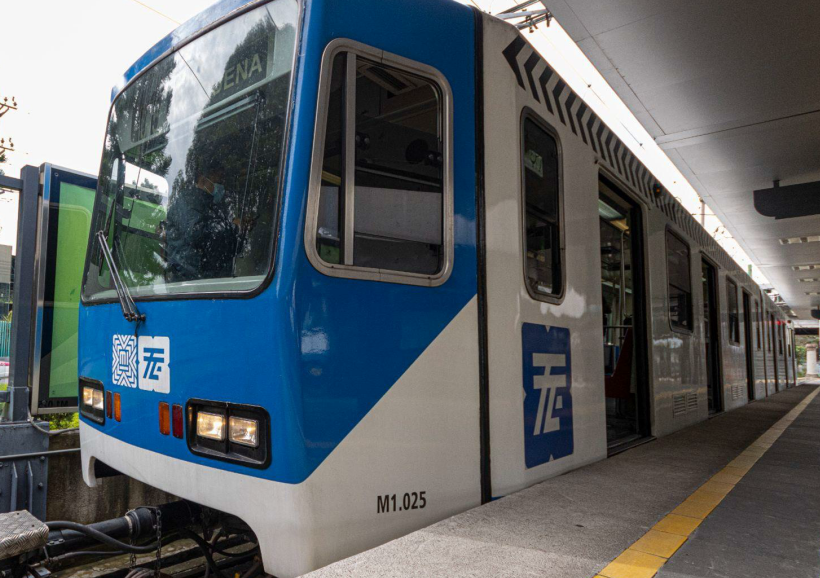
Direct connection to the stadium: The Taxqueña station (Line 2) transformed its accesses with new automatic doors, drastically improving the flow of fans transferring to the Light Rail heading to the Mexico City Stadium.
Fleet maintenance: An exhaustive review and "tune-up" of the NM02 trains on Line 2 (including braking systems with advanced synthetic materials) was carried out to guarantee efficient and safe transfers during matches and Soccer Festivals.
Frequently Asked Questions
What is the fare and how do I pay for the trip?
The universal cost per trip is $5.00 MXN, regardless of distance or internal transfers.
Access is exclusive via the Integrated Mobility Card (MI).
As a great technological novelty for visitors, it is now possible to pay for access directly at the turnstiles using contactless credit or debit bank cards, as well as digital wallets from your smartphone or smartwatch (Apple Pay, Google Wallet, etc.).
Where can I get the MI Card?
You can purchase it for $15.00 MXN at the ticket booths of any Metro station or at the automatic vending machines located in Metrobús, Cablebús, and Light Rail stations.
These machines accept cash and bank cards to buy the plastic card or recharge the balance. The maximum allowed balance is $500.00 MXN.
How do I identify the lines and directions?
The network has 12 lines identified by colors, numbers, and letters. The main lines are 1 through 9 and 12 (Golden).
The routes connecting to the State of Mexico are identified as Line A (Purple) and Line B (Green/Gray). For orientation, directions are indicated by the name of each route's terminal station.
On all platforms and hallways, you will find maps of the network and the surrounding neighborhood to locate points of interest.
What are the hours of operation?
The system operates 365 days a year:
Monday to Friday: 05:00 to 24:00 hrs.
Saturdays: 06:00 to 24:00 hrs.
Sundays and holidays: 07:00 to 24:00 hrs.
What should I know about rush hours and the weather?
The busiest hours are from 7:00 to 10:00 hrs and from 17:00 to 21:00 hrs.
During these periods, or in the presence of rain, trains may experience delays due to high demand and driving safety protocols. It is recommended to plan your transfers with extra time during these hours.
Is it safe to travel on the Metro?
Safety has constantly improved, but it is always recommended to:
Carry your backpack or bag in front in crowded areas.
Avoid keeping valuables (wallets or phones) in back or outer pockets.
Keep an eye on your belongings during transfers.
Are there exclusive cars?
Yes. On most trains and throughout the operating hours, the first three cars are reserved exclusively for the use of women and children under 12 years old.
This measure seeks to guarantee a comfortable and safe journey for these groups of passengers. Access to these areas is clearly marked on the platforms.



 Calz. de Tlalpan, Pbo. Sta. Úrsula Coapa, 04650 CDMX
  Metro & Transit Stops